Audio Analogue

Home Page   |   Company   |   Contacts   |   Dealers

Audio Analogue

Catalogo Prodotti

Recensioni

F.A.Q.

Cerca nel sito

Iscriviti alla newsletter

News ed eventi

Informazioni tecniche


NEWS

EVENTO

PHOTOGALLERY


F.A.Q. (Frequently Asked Questions)


1.

2. Which is the better connection? The balanced or unbalanced one?

3.

4.

5. Which are the differences between Puccini Settanta and Puccini Settanta Rev 2.0?

6. My Maestro settanta REV2.0 sometimes switches off showing "DC offset" on the display. If I turn off and turn on the unit everything seems to be ok and it properly works. It is damaged?

7. Which are differences between the Maestro CD 192/24 REV2.0 and its previous revision? Is possible to update a Maestro CD Player 192/24 to the REV2.0? How?

8. Which are the main differences between the Enigma REV2.0 and the previous one?

9. Is possible to equalize the Enigma audio output?

10. What are the differences between the revisions of the Puccini SE and how can I recognize a revision from the other?

11. I would like to ask you, what's the function of a little hole below the cd door in the Paganini cd player? Thanks.

12.

13. Is it possible to bridge the Donizetti stereo power amplifier to make it operating in mono mode?

14. Is it possible to use products from different manufacturers in combination with the Audio Analogue pre and power amps?

15. How the sound quality of the Audio Analogue products change depending on the style of music?

16. Is it possible to use the Audio Analogue amplifiers in combination with DVD-A and SACD sources?

17. Is it possible to upgrade a Puccini (Remote) into a Puccini S.E. (Remote)?

18. Is there a recommended power cord?

19. What are the differencies between the old and new versions of the Paganini and Maestro CD?

20. Is it possible to upgrade the Puccini and Puccini S.E. to their corresponding Remote versions?

21. Is it possible for the Audio Analogue amplifiers to drive 4 Ohm impedance loudspeakers?

22. What are the technical and sonic differencies between the Puccini, Puccini S.E., Puccini Remote and Puccini S.E. Remote?

23. Which loudspeakers and cables are best suited with the Audio Analogue products?

24. Is it possible to make the old and new CD players compatible with the HDCD?

25. Is it possible to change the operating mains voltage of the Audio Analogue products?


Don't you find what are you searching for? Propose your FAQ!


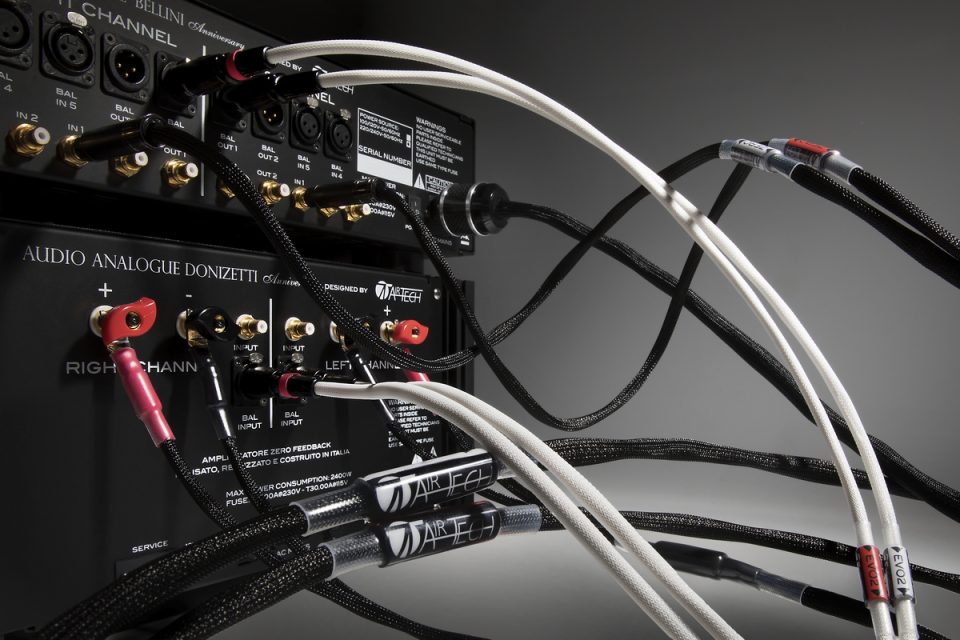
2. Is not easy to answer and also we can't give a definitive answer good for any case. In fact the balanced connection is supposed to be better because reject the common mode noise on the connection while the unbalanced one can't. But at the same time using the balanced connection usually requires the signal to pass a further stage. This is because at the balanced input the difference of the two balanced signals (the in phase and the out of phase ones) is performed to reject immediately the common mode noise. In some other architectures all the signal chain is doubled and the power stage is a bridge type. Therefore the difference between the two balanced signal is performed at the loudspeaker level. This at a first view could appear as the perfect solution but instead is not! Or better generally is not. In fact the two signal chain will hardly be equal especially for the power stage because of the components tolerances, the different tracks impedance caused by length mismatches, the different temperatures that can be spread on the board... Theoretically two identical signal chain can be made but the involved parameters are really difficult to control. As a result when the original common mode noise appears at the loudspeakers is not more "exactly" equal on the two in phase and out of phase (as it was at the input connection) and therefore the difference between the two signals can't effectively and completely reject it. Instead the other approach, to make immediately the difference of the two balanced signals, is much more controllable! (Note) Of course to double the signal chain and use a bridge power stage has its advantages but not that to better rejecting the common mode connection noise. By the way also the balanced input design is not trivial if very good performances are required. We have to control the impedances and make the stage as "transparent" as possible. The Maestro Duecento performs the difference between the balanced signal immediately to reject the common mode noise. The stage has been designed to not "touch" the audio signal but anyway the signal has to pass it. Therefore we can say that both the connections have pro and contra. Balanced Pro: the balanced connection reject the common mode noise. Balanced Contra: the signal passes a further stage. Unbalanced Pro: the audio signal reaches the integrated amplifier inner audio chain by the shortest path passing the lowest number of stages. Unbalanced Contra: the signal is prone to be contaminate by common mode noise. I would to point out that the common mode noise on the signal depends on the environment where the audio system is placed and on the audio system itself (how the different equipments are connected, how, which cables are used...) hence can't be predicted before the system is installed. Sorry if I've been too much tedious but the subject is quite "intriguing"... Then we can answer the original question. If the signal is corrupted by common mode noise the balanced connection is better. If there is not common mode noise the unbalanced is preferable. Because the common mode noise depends on the environment and system and the amount which causes one connection to be better than the other depends on the whole audio system and environment as well, we come back to the first answer: we can't give a definitive answer good for any case! What the customer will have to do is to test its system in the different connections and listen to the differences (in fact I think the customer doesn't have a spectral analyzer to exactly measure the differences between the two connection). In such listening test, the starting point is to estimate the noise floor on the loudspeakers both at high and low frequencies. Remind to do the test with the same audio signal level, this not necessary requires to set the same volume level on the integrated amplifier because the level of the audio source is usually different between balanced and balanced output. Again use your ear to judge it. A phonometer can also be useful to measure the noise floor if one is around... Then listen to a music track to compare the differences. This is usually harder to compare, if you don't listen large differences between the connections and you have concluded one to be the better in the "noise floor" test use the connection winning the "noise floor" test in the system. Note: of course there are also other approaches such as a pre stage which could manage both the balanced and unablanced signals...

8. Audio Performances (for further details see the introduction document at the link: http://www.audioanalogue.com/Download/EnigmaREV2.0Intro(Eng).pdf): • New Preamp Section: the new Enigma Rev2.0 has really better audio quality compared to the previous one (both on the listening tests and technical tests, see the technical data for further details) and that is due mainly to the new Vacuum tube Preamplifier section. The new Pre-amp has been designed developing the Rossini CD Player Vacuum Tube output stage which shown to be astonishing musical. The stage has been modified to be used like a preamplifier stage further increasing the audio quality of the circuit • New Digital to analog section: the Enigma REV2.0 has a new improved DA section based on a Burr Brown 192KHz/24bit Enhanced Multilevel sigma Delta DAC. • Power stage: the new preamp section has remarkably improved the bass response of the product so we have tuned the power stage to improve the bass response capability of the power stage. Input/Output connections: • Mono Out: the Enigma REV2.0 has a mono output to directly drive an active subwoofer • Front In: the Enigma REV2.0 has a Line Input placed on the front panel to be easily connect to the Line output of an MP3 Player such as an iPod for example Control: (see the user manual for details) • No Pre StandBy: the previous revision had a pre standby procedure to let the vacuum tube get cold before the unit were switched on. The Enigma Rev2.0 doesn't have any pre standby procedure, and after the cable is plugged in and the main switch in the rear panels is turned off it is immediately ready to be switched on. • Reduced Vacuum Tube heating time: in the new Enigma revision the vacuum tube power supply is different and because of that not only the pre standby has been eliminated but also the vacuum tube heating time has been reduced to 15 seconds only! • Auto Play/Volume recall function: these function have been implemented to permit the user to automatically play a source with a particular audio level. That's say you have just to turn on the unit and after some seconds you will listen the music with no needs to send any command! In other words get into your home switch on the Enigma go in the bedroom to take off your shoes and the Enigma is playing! (see the user manual for details) • Selectable volume scale: it is possible to select the volume scale of the unit to have the best match with the used loudspeakers (see the user manual at page for details) • Balance function Design • New front design to move the light on the product, let the light run on the whole front and create the illusion of a product composed by two ones. The upper part has been lighten reducing the number of switches, and the silkscreens have been placed to balance the vacuum tube window. • New front grey background display with better contrast and brightness.


FAQ technical informations


FAQ general informations